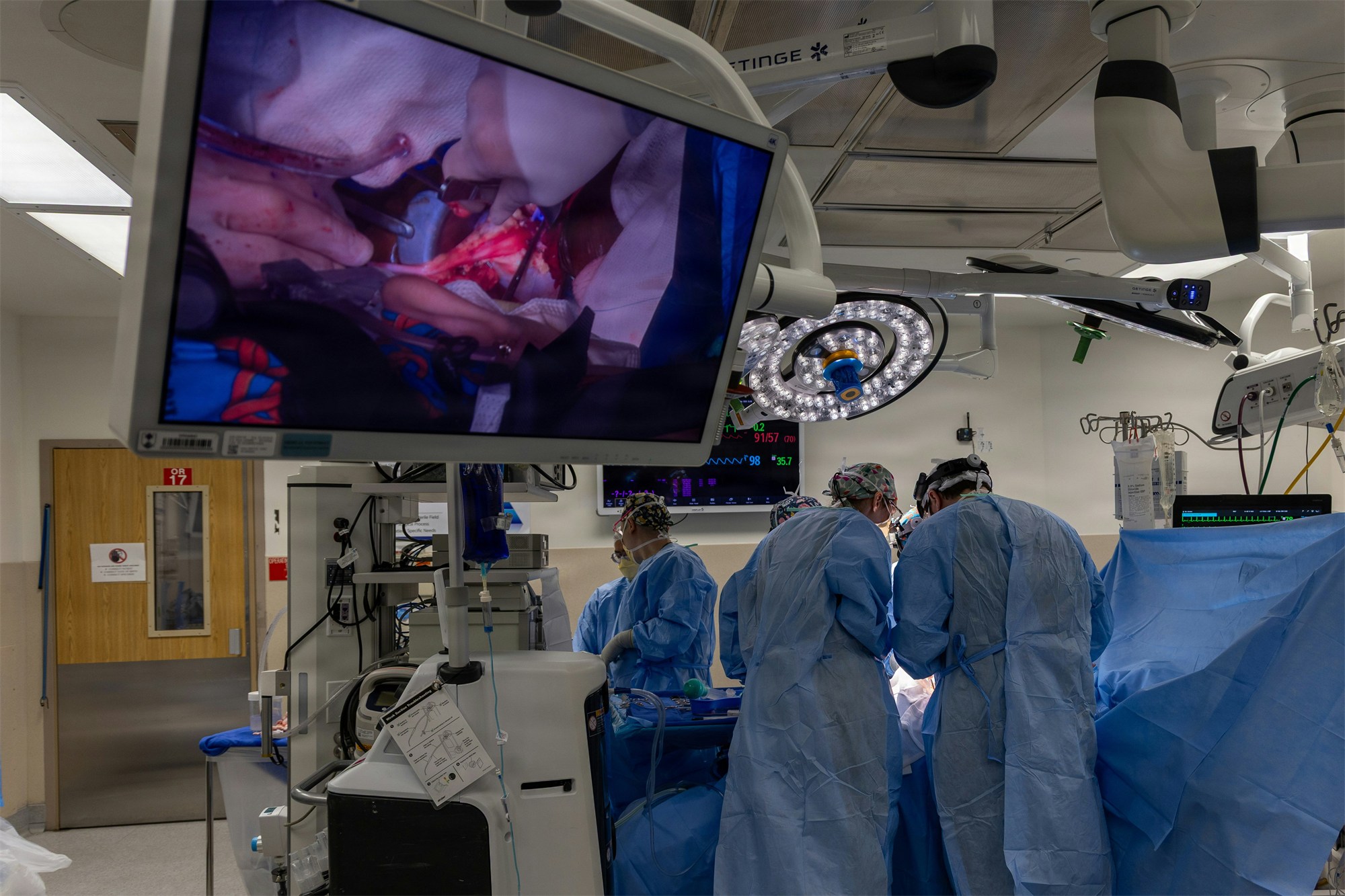
Wireless surgical video refers to camera and display systems used in operating rooms, cath labs, GI suites, and procedure rooms that depend on the transmission of real-time video without a physical cable connecting the video source to the display monitors. This readily available plug-and-pair wireless technology is now preferred in lieu of costly integration investments which route the necessary connection cables through booms, walls, or floor conduits for a hard-wired connection. In contrast, the wireless signal travels over a dedicated wireless link, avoiding the line-of-sight necessity. This wireless technology, created by Rocoto, has been engineered to provide the reliable image quality surgeries demand.
How It's Different From Everyday Wireless Streaming
Consumer wireless video, casting a phone screen to a TV, for example, tolerates a small delay and the occasional dropped frame without real consequence. An intraoperative surgical video feed cannot afford this latent image delay disruption. Rocoto's connectivity products (MD11, MD52x, MD62, and the EM11/EM21 embedded modules) are built to a different standard: under 1ms latency, 4K resolution at 30-60fps depending on the model, and a point-to-point 5GHz link that stays separate from the hospital’s general Wi-Fi network - it uses the same unlicensed band, but not the hospital’s infrastructure - with Automatic and Dynamic Frequency Selection continuously steering each link to the cleanest available channel. In regard to HIPAA compliance, the wireless feed does not transmit or store any patient information.
What It's Used For
In practice, wireless surgical video covers several distinct product categories. Camera solutions include Rocoto's SL11, an in-light camera with 360° rotation that surgical lighting manufacturers integrate directly into their fixtures at the factory (available through those lighting partners rather than as a standalone add-on), and HM11x, a head-mounted camera that streams the surgeon's point of view for training and documentation. Connectivity solutions like MD11, MD62 and MD52x are the receivers and video links that bring that signal to a monitor. Embedded solutions like EM11 and EM21 let OEM manufacturers build wireless video directly into endoscopy towers, C-arms, and other clinical equipment.
Why Hospitals Are Moving Toward It
The appeal isn't wireless for its own sake, it's what removing the cable solves. Wired solutions require costly integration investments. Cables create trip hazards and turnover delays, restrict where a monitor can physically be placed, and complicate cleaning around the boom and floor. Additionally, the wires disrupt the ability to consistently reconfigure a room for specialty cases requiring additional equipment or patient positioning flexibility. Transitioning to wireless connectivity provides clinical teams the flexibility and convenience required to maintain control during room turnovers.
Because the video is multicast, the same feed can also be shown on several displays in and outside of the room simultaneously - a second monitor for the assisting surgeon and scrub techs, a monitor for the anesthesia team, or a display for residents, fellows and supporting vendors.
Installation is quick and user-friendly. Once a transmitter and a receiver are paired, imaging transfer begins. In contrast to wired options which require pulling cables through a boom, a wall, or a floor conduit, surgical rooms can be retrofitted for wireless technology without a costly construction project requiring room closure for weeks at a time.
Security is built into the link, not added on top of it. The video link is encrypted, and because the transmitter and receiver communicate only with each other, the system stays off the hospital network entirely - no additional device on the hospital LAN, and no new endpoint for IT to monitor and secure.